Leave No Trace Principles for North Carolina Backpackers
North Carolina’s mountains invite you into something real. Deep forests. Quiet ridgelines. Cold streams that still run clear. But the same places that feel wild are also under pressure. Increased visitation in Pisgah and Nantahala National Forests, heavy use along the Art Loeb Trail, and crowded weekends in Shining Rock and Linville Gorge all mean one thing: understanding and applying the leave no trace principles matters.
Leave no trace is rooted in building skills so that your trip does not create a lasting impact. When practiced well, Leave No Trace protects wildlife, keeps campsites from expanding, preserves water quality, and ensures that the next person gets to experience the same sense of discovery you did.
If you are new to backpacking in North Carolina, this guide will help you understand how the seven principles apply specifically to our terrain, climate, and wildlife. If you already spend time in the backcountry, think of this as a reset. A reminder that responsible travel is part of becoming a stronger, more capable backpacker.
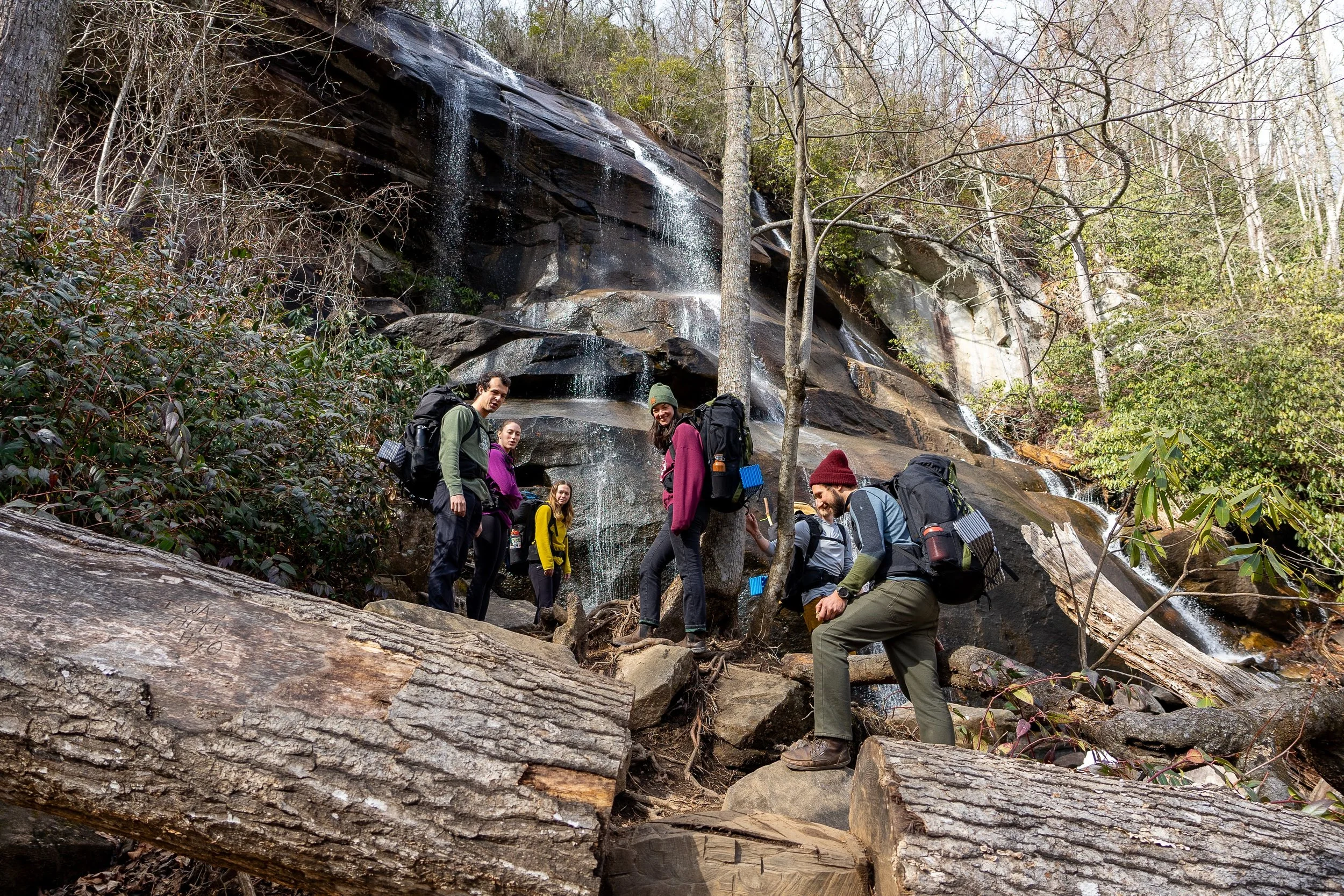
It is important to protect natural resources like the Toxaway River for future generations. (Courtesy photos: M. Briley)
Why Leave No Trace Matters More in North Carolina’s Backcountry
High Traffic in Pisgah and Nantahala National Forests
Western North Carolina has seen a steady rise in outdoor recreation. Trails that were once quiet now see steady use. Popular backcountry corridors fill quickly in peak seasons.
High traffic creates predictable problems:
Campsites widen as groups spread out
Informal fire rings appear near established sites
Social trails form around muddy sections
Human waste accumulates in high use zones
Increased use is not inherently bad. It simply means each person’s impact compounds faster. A shortcut taken once may not be visible. A shortcut taken one hundred times becomes a permanent scar.
Leave No Trace becomes more important in places where visitation is high because the margin for error is smaller.
Fragile Mountain Ecosystems
North Carolina’s mountains may look rugged, but many areas are ecologically sensitive. High elevation balds are particularly vulnerable. Vegetation grows slowly. The soil is thin. Once trampled, it can take years to recover.
Other fragile environments include:
Wet forest floors that erode easily
Stream banks along waterfall corridors
Rhododendron and mountain laurel thickets that protect soil structure
Backpacking in these areas requires thoughtful movement and campsite selection. Just because a spot looks open does not mean it can handle repeated use.
The Impact of Weekend Backpacking Culture
Short overnight trips are common. Many backpackers head out Friday evening and return Sunday. Campsites turn over quickly.
This pattern increases:
Fire ring expansion
Food scraps left behind
Improperly buried waste
Impact near water sources
Leave No Trace is not just about restricting access. It is more focused on building habits that allow high use areas to remain functional without long term damage.
The 7 Leave No Trace Principles Explained for NC Backpackers
1. Plan Ahead and Prepare for NC Conditions
Good planning reduces environmental impact. When you are prepared, you are less likely to make reactive decisions that damage trails or campsites.
In North Carolina, planning should account for:
Rapid weather changes across elevation
Afternoon thunderstorms in summer
Freezing conditions at higher elevations in winter
Seasonal bear activity
Reliable water source mapping
Poor planning leads to preventable issues. If you underestimate mileage, you may camp too close to water. If you forget rain protection, you may widen a trail to avoid mud. If you fail to plan food storage, wildlife may become conditioned to human food.
Preparation protects both you and the landscape.
2. Travel and Camp on Durable Surfaces in the Blue Ridge
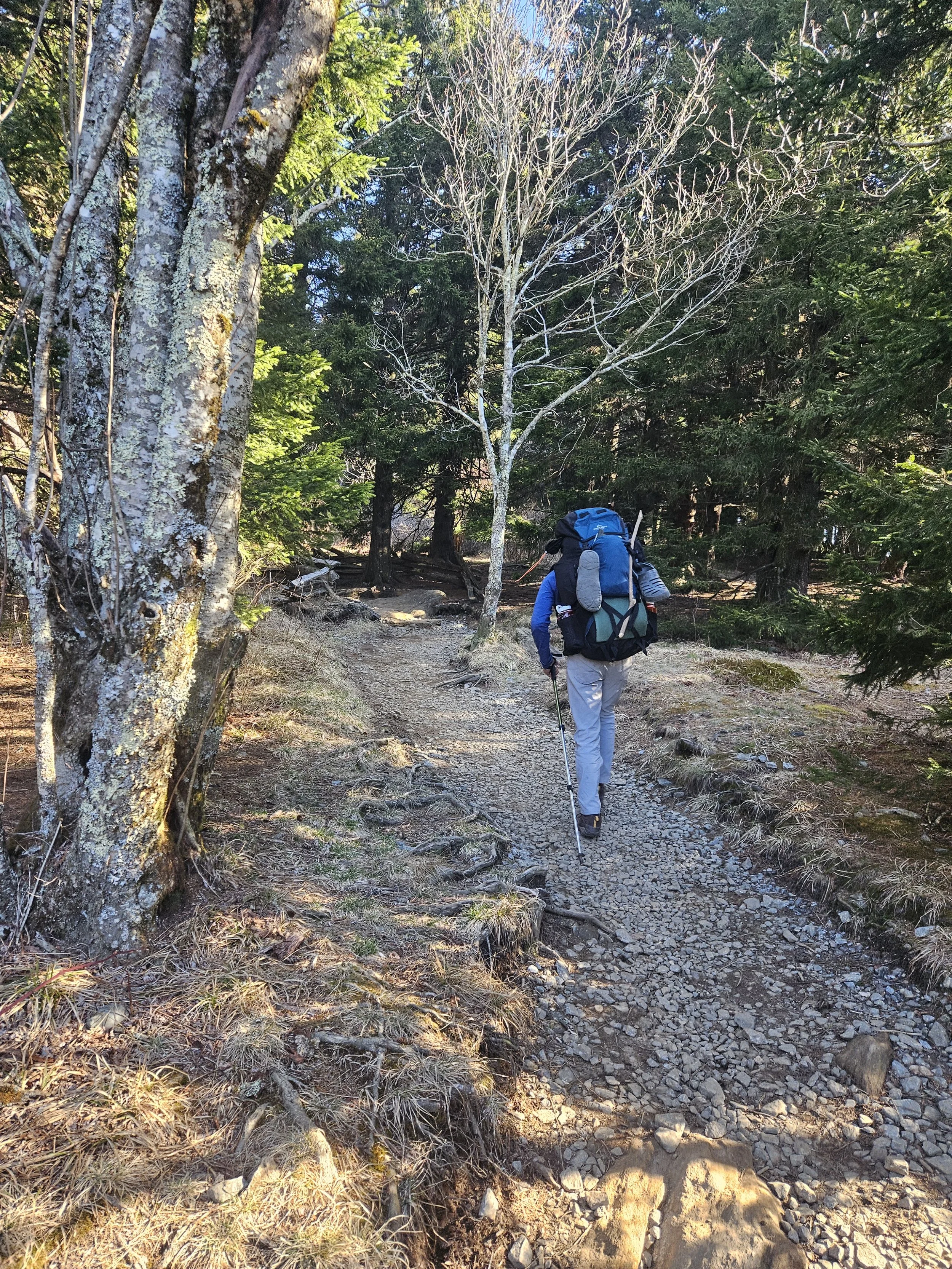
Durable surfaces include established trails, rock, gravel, and designated campsites. In North Carolina’s forests, soil can be soft and easily compacted.
On the trail:
Stay centered even when muddy
Avoid cutting switchbacks
Do not create parallel paths
At camp:
Use established sites whenever possible
Camp at least 200 feet from water
Avoid high elevation balds unless camping is clearly allowed
When encountering mud, walk through it. Stepping around it widens the trail and damages vegetation. Over time, that widening becomes permanent.
Choosing durable surfaces is one of the most visible Leave No Trace practices. It directly protects soil health and prevents long term erosion.
3. Dispose of Waste Properly in the Backcountry
Everything you carry in must come out. That includes food scraps and hygiene products.
For human waste in most national forest areas:
Dig a cat hole 6 to 8 inches deep
Stay at least 200 feet from water, trail, and camp
Cover and disguise the site thoroughly
Toilet paper should be packed out whenever possible. In high use areas such as sections of Linville Gorge or the Art Loeb Trail, packing out toilet paper is strongly recommended due to soil saturation.
Food scraps do not decompose quickly in mountain environments. Even biodegradable waste attracts wildlife and alters behavior.
Waste disposal is one of the most common failure points for beginners. Learning proper techniques is part of becoming a responsible backpacker.
4. Leave What You Find
Natural areas are not souvenir shops. Rocks, flowers, and artifacts belong where they are.
Avoid:
Rock stacking at waterfalls
Picking wildflowers
Carving trees
Moving natural features to create seating
One rock moved may not seem significant. Hundreds moved reshape a landscape. Removing flowers prevents seed production. Carving trees causes long term damage.
Leave the environment as you found it. Better yet, leave it slightly improved by picking up stray litter.
5. Minimize Campfire Impact in Western North Carolina
Campfires can create lasting scars if not managed carefully.
Before building a fire:
Check current fire restrictions
Use established fire rings only
Keep fires small
Wet forests often contain partially rotted wood. Burning large pieces creates excessive ash and leaves unburned debris. In dry fall seasons, fire risk increases.
Consider alternatives such as backpacking stoves. They are efficient, low impact, and eliminate the need for wood collection.
If you do build a fire, burn it down to ash and scatter cooled remains where appropriate. Never leave a smoldering site.
6. Respect Wildlife in Bear Country
Following U.S. Forest Service food storage guidelines helps reduce bear encounters and wildlife conditioning.
Use:
Bear canisters where required
Properly executed bear hangs when allowed
Odor resistant storage methods
Never cook directly next to your sleeping area. Store food away from camp. Keep snacks secured at all times.
Respecting wildlife also includes maintaining distance. Do not approach deer, snakes, or other animals for photos. Wildlife encounters are rare when food is stored properly and camps are kept clean.
7. Be Considerate of Other Visitors
Backpacking is a shared experience.
Practice:
Yielding to uphill hikers
Keeping group size manageable
Using quiet voices in camp
Dimming headlamps at night
Respecting other visitors preserves the sense of solitude many seek in these forests.
Leave No Trace for Specific NC Backpacking Destinations
Pisgah National Forest
Pisgah contains heavily used backcountry corridors. Waterfall areas are especially sensitive due to concentrated traffic. These expectations align closely with North Carolina State Parks conservation guidelines for protecting sensitive natural areas.
Backpackers should:
Use established campsites
Avoid camping near waterfall bases
Stay on marked trails
Nantahala National Forest
Nantahala includes remote terrain where self reliance is essential. Fewer established sites mean greater responsibility.
Choose durable ground and avoid creating new fire rings.
Shining Rock Wilderness
High elevation balds are fragile. Camping on vegetation can cause long term damage.
Stick to established sites and avoid trampling exposed plant life.
Linville Gorge Wilderness
Steep terrain increases erosion risk. Human waste management is critical due to concentrated use.
Select durable sites and follow strict waste disposal practices.
Common Leave No Trace Mistakes NC Backpackers Make
Even well intentioned hikers make mistakes.
Common issues include:
Cutting switchbacks to save time
Expanding campsites for comfort
Building new fire rings
Leaving biodegradable trash
Camping too close to water
Improper food storage
These mistakes often stem from inexperience rather than carelessness. Education and repetition through outdoor classes focused on leave no trace principles build better habits.
Leave No Trace and Emergency Situations
Safety always comes first. In a true emergency, survival may require deviation from ideal practices.
However, many emergencies are preventable through:
Realistic mileage planning
Weather awareness
Proper gear selection
Navigation skills
When emergencies are minimized, environmental impact is also reduced.
A Practical Leave No Trace Checklist for Your Next NC Backpacking Trip
Before You Go
Check weather forecasts
Research water sources
Plan realistic mileage
Understand food storage methods
On the Trail
Stay on durable surfaces
Respect muddy sections
Yield properly to other hikers
At Camp
Use established sites
Store food securely
Dispose of waste correctly
After Your Trip
Clean gear to prevent invasive spread
Share responsible trip practices
Reflect on what could be improved
Learning Leave No Trace Through Guided Backpacking
Leave No Trace becomes easier when practiced on guided backpacking trips that teach leave no trace principles. Skills such as campsite selection, food storage, and route planning improve with feedback.
North Carolina’s terrain presents unique challenges. Learning in the field builds confidence and reduces impact.
Responsible backpacking is not about restriction. It is about growth. When you build these skills, you protect the places that allow you to explore, learn, and grow.
The goal is simple. Travel through the backcountry in a way that leaves it ready for the next person.