
Guidelines for protecting the Gorges
As the rains return and crowds arrive full force in Transylvania County, the woods begin blossoming with colorful wildflowers by our feet and a multitude of bird activity hovers above our heads.
Whether we are regulars that frequent the woods and waterfalls of Gorges State Park or just coming by for a day, here are a few things to keep in mind that will protect this amazing place.
Our trails enable us to engage with nature from inside the forest.
Swaths of bright, white trilliums under the forest canopy complement our warblers and grouse (but be careful not to sneak up on them or else you may get spooked).
Fragile lichen habitat and crystalline waterways can be accessed via Gorges’ trails; and what’s more the resources are protected by these carefully constructed lines of dirt.
The mission of Friends of Gorges State Park is to help all our wonderful visitors engage with this special cliff-dwelling rainforest and we would like to take this month’s article to highlight some of the guidelines that help keep these woods pristine and safe.
Gorges has a lot of waterfalls. There’s a certain allure both in the roaring whitewater waterfalls and the rolling scenic cascades found within the park.
It is important for visitors to practice safe habits while around either of these water features as both can present certain inherent dangers.
Official trails and walkways allow visitors to observe and appreciate the waterfalls from safe and sturdy ground.
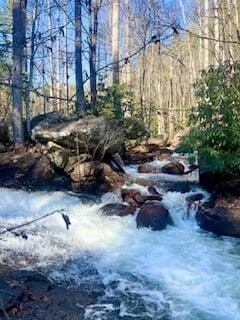
It is important to protect natural resources like the Toxaway River for future generations. (Courtesy photos: M. Briley)
It is no secret people get hurt or die on these waterfalls about every year, and we all have an opportunity to protect each other by reminding other park users that their actions can have unintended consequences such as putting local rescue squad members in precarious situations or forcing management to add barriers around prominent water features to deter visitors from accessing the tops of waterfalls.
Protecting the resource includes being considerate of those whose job it is to manage them because we are all stewards of these places.
Warmer seasons bring abundant wildflower blooms in Gorges State Park.
The next few months will provide wonderful opportunities to learn about, photograph and generally appreciate the abundant diversity in plant life found in Gorges.
We find an important part of enjoying these species is by allowing other visitors the opportunity to enjoy them on future visits to the park as well.
On average it takes being stepped on four times to kill most wildflowers.
This again highlights the importance of staying on marked trails while visiting Gorges as well as the surrounding natural areas.
In order for these rare flowers to continue blooming in Gorges for generations, we can all share the responsibility of protecting the resource by encouraging other visitors not to pick flowers, even if there appears to be many of them.
Visitors are not allowed to remove any natural resource from the parks and this operates on the premise that if all or even most of Gorges’ thousands of visitors were to take a little piece of Gorges home with them there would be little to none left for future visitors.
We are all stewards of these places.
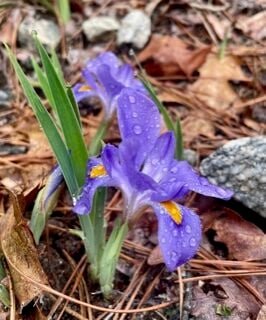
This warm iris could be easily trampled if visitors to Gorges State Park are not mindful.
Many of us at Friends of Gorges have found deep value in conversations by the campfire.
Provided there are no active fire bans in the area, visitors using designated campsites will often have fire rings by which they can enjoy their evenings.
It is vitally important that someone is tending to the fire for as long as it burns.
Before going to bed, fully douse the fire with water and stir up the ash to check for any residual heat that could potentially lead to unwanted fire spreading.
Even if fire pits are full, fully douse them and spread the wet ash by the woodland to return nutrients to the soil.
This will encourage growth in local plant life as well as deepen the fire ring which will better contain the fire.
The danger of a fire spreading is obvious, however there is another major stewardship component to fire: the source of the firewood.
Only local wood should be burned in Gorges State Park. Foreign woods may contain foreign insect species which can become invasive and degrade the local environment.
The devastation from invasive insects can easily be seen in the plight of the Hemlock tree whose numbers have been drastically reduced across the US since the Hemlock Woolly Adelgid (an Asian beetle) was first spotted in the US in 2002.
Protecting local species from invasives is important work that we can all attend to during our time enjoying these ancient mountains.
We are all stewards of these places.