Best Waterfall Hikes Near Asheville & Brevard
It’s not unusual to meet someone who's lived in this area their whole life and never actually been into Pisgah National Forest. Never seen the main waterfall that sits fifteen minutes up the road from their house. This is one of the driving forces behind Adventure Grown Guides and helping people explore nature right in their own backyard.
That's not a rare story around here. It says something about how easy it is to live next to all of this and still not know where to start. Western North Carolina has more waterfalls than most people could see in a lifetime, and that's part of the problem. Search "waterfall hikes near Asheville" and you'll get a list of the same eight or nine falls, most of them packed with visitors by mid-morning. That's not a knock on those trails. They're popular because they're good. But if you're planning a day around waterfalls, whether you're visiting or you've lived here for years, it helps to know which ones are worth the crowd, which ones you can have mostly to yourself, and which ones work better as part of a longer hike than as a standalone stop.
We guide these trails year-round, and recommend waterfalls for clients based on how much walking they want to do and what kind of day they're after.
Where to Find the Best Waterfall Hikes Near Asheville and Brevard
Most of the waterfall hikes worth your time fall into two general areas: DuPont State Recreational Forest and the Pisgah Ranger District of Pisgah National Forest, which covers the Brevard, Hendersonville, and Waynesville area. Both are within about 45 minutes of Asheville, and both have a mix of short, easy walks and longer routes that pair a waterfall with a bigger day outside.
DuPont State Recreational Forest
DuPont is where most first-time visitors end up, and for good reason. It has a dense cluster of accessible waterfalls, well-marked trails, and enough parking and signage that you can plan a trip without much guesswork. It's managed by the North Carolina Forest Service rather than the U.S. Forest Service, which is why the trail system and rules look a little different from Pisgah's.
Pisgah National Forest, Brevard Side
The Pisgah Ranger District is the section of Pisgah National Forest around Brevard, and it's where a lot of the region's classic waterfall hikes live, along with landmarks like Looking Glass Rock, John Rock, and the Cedar Mountain area. Trails here range from a short walk off the road to full-day routes that climb toward a summit view before dropping back down to a falls.
Easy Waterfall Hikes Under a Mile
If you want to see a waterfall without committing to a full hiking day, these are the three to know.
Moore Cove Falls
Moore Cove Falls is a straightforward out-and-back, about 0.7 miles each way, ending at a waterfall you can walk behind. It's a good option for families or anyone who wants a real trail experience without a long climb.
Looking Glass Falls
Looking Glass Falls is visible right from the road, which makes it more of a scenic stop than a hike. Worth pulling over for, but don't expect to have it all to yourself. This is one of the most photographed waterfalls in the region, and it draws a crowd nearly every day of the year.
DuPont's Three Falls Loop
The Three Falls Loop in DuPont connects High Falls, Triple Falls, and Hooker Falls in one trip. It's one of the most visited waterfall trails in Western North Carolina, and depending on the season, you may be sharing the trail with a lot of other people. Still, seeing three distinct waterfalls in a single loop is hard to beat if you're short on time.
Waterfall Hikes for a Longer Day
If you'd rather build a full day around a waterfall instead of just stopping to see one, these two options pair a falls with more trail and, in one case, a summit.
John Rock and Cedar Rock Creek Falls
This route climbs to the summit of John Rock, which gives you a high point view over the Pisgah Ranger District, and includes a stop at the falls along Cedar Rock Creek, sometimes called Cedar Falls. It's a longer, more physical day than the trails above, and it's a good example of what we mean when we say a waterfall doesn't have to be the whole trip. It can be one part of a bigger one.
Cove Creek Falls and Daniel Ridge Falls
Cove Creek Falls and Daniel Ridge Falls, which also shows up online under the name Tom Spring Falls, are both beautiful cascades that are easy to reach once you know the route, but easy to miss without it. Expect more navigation than the trails above, and less company on the trail once you get there.
What Most People Get Wrong About These Waterfalls
Most waterfall content stops at directions and mileage. Here's what we actually tell clients before they get to the falls.
A lot of people picture a waterfall as a single vertical drop, but most of the waterfalls in this region aren't built that way. They cascade down long stretches of open, slabby rock, and that rock stays wet and slick even when it hasn't rained in days. That combination, wet slab and a slope that looks walkable, is exactly why waterfalls here are more dangerous than they look from the trail.
Every year, local emergency services respond to rescues involving people who climbed to the top of a waterfall and fell. It's a common enough problem that we treat it as a core part of how we guide. There isn't always clear signage warning people away from the tops of these falls, and unofficial side trails often lead right up to the edge, so it's easy to see why people end up there without meaning to take a risk.
Our general rule, and one we'd recommend to anyone hiking these trails on their own, is to view waterfalls from the bottom, not the top. It's not about restricting how people move through the backcountry. It's that the view from below is usually better anyway, and it doesn't come with the same risk. If you specifically want the experience of being at the top of a waterfall, canyoneering and waterfall rappelling are popular activities in this region and give you that vantage point the right way, with the right gear and training. For a broader rundown on staying safe on these trails, our Safety Tips blog covers the basics we ask every client to know before heading out.
When to Go: Waterfalls Through the Seasons
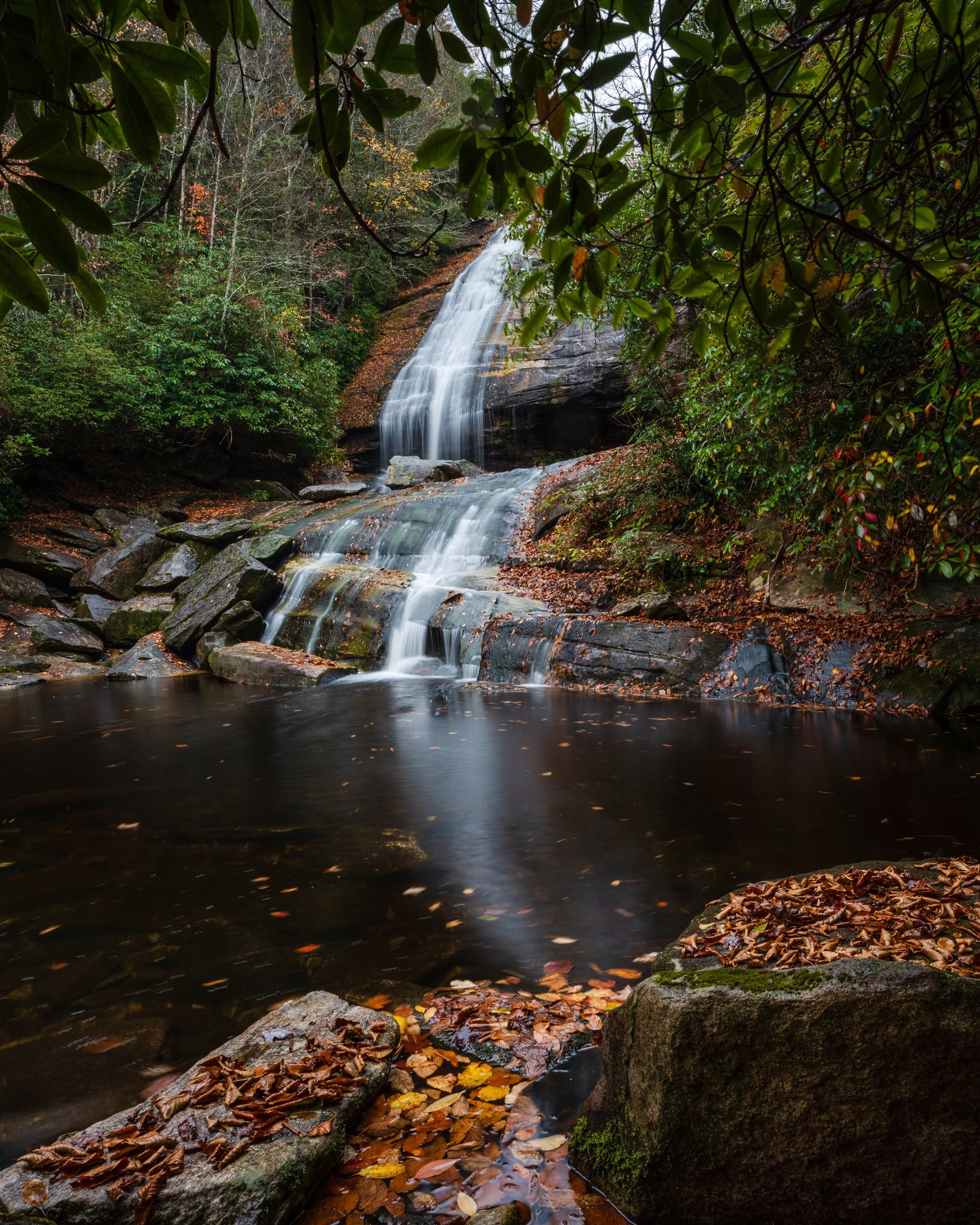
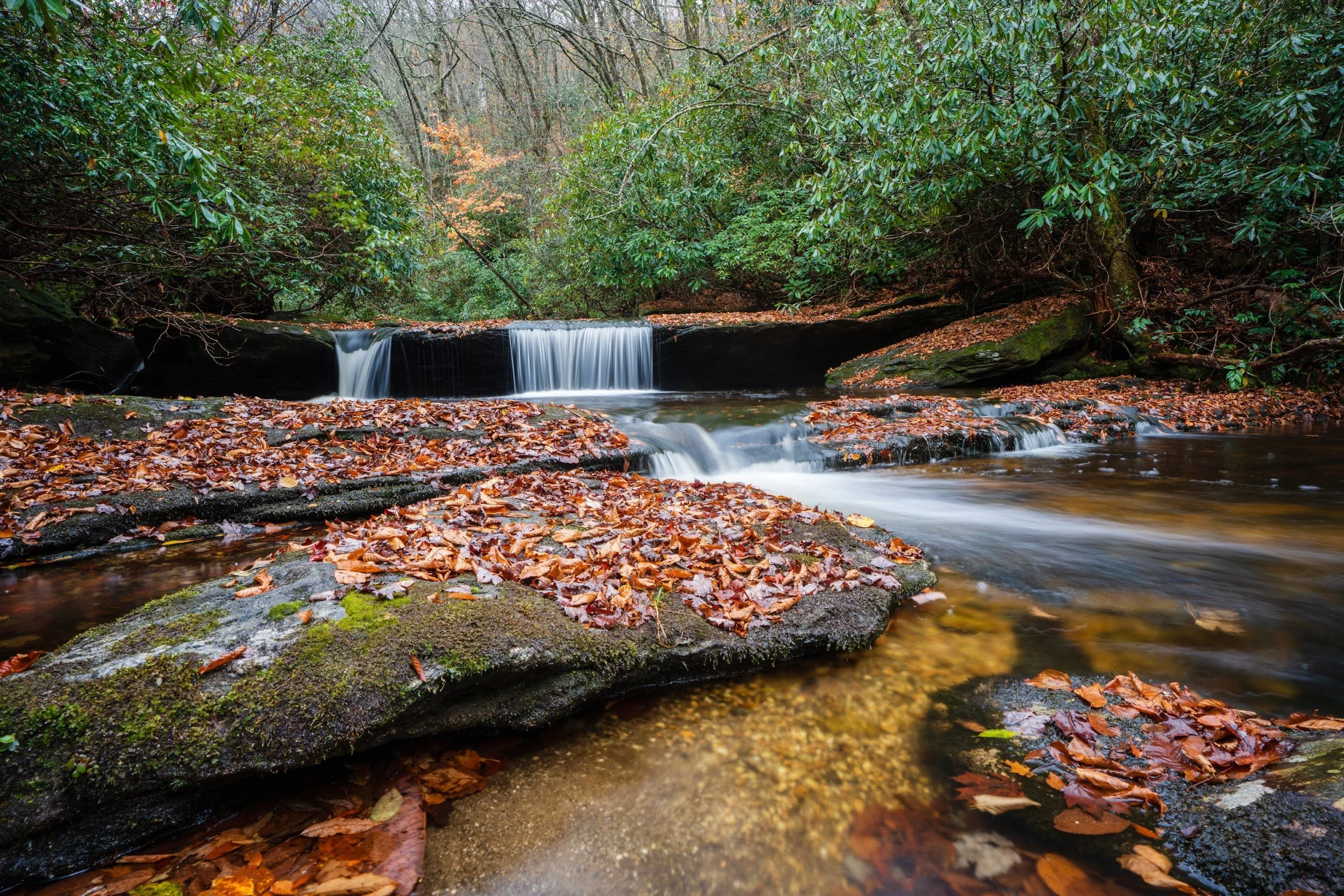
Fall is a great time to see waterfalls in Western North Carolina. The leaves change color around the falls, some of them fall into the water and drift past as you're standing there, and the cooler temperatures make for comfortable hiking. If you're planning a trip around leaf season, waterfalls are a solid way to build a day.
That said, these falls are worth visiting any time of year. Flow rates shift with the seasons and with rainfall. During dry stretches or periods of drought, which have become more common, the flow can slow down noticeably. It doesn't ruin the experience, but it does change it. Winter has its own advantage: with the leaves down, you often get a clearer, more open view of the falls than you would in summer.
There isn't really a wrong season to plan a waterfall hike here. It's more about what kind of scene you want.
Wildlife You Might Spot Along the Way
Waterfalls and wildlife don't usually overlap the way people expect. The most popular falls, the ones near the road or on a well-traveled loop, tend to be too busy for most wildlife beyond birds. Animals are simply too spooked by the foot traffic to stick around.
If you do want a shot at seeing something beyond birdlife, quieter and less-trafficked trails are where it happens. We've had moments with clients where a bald eagle appeared over a vista, or a bear crossed the trail ahead, and those moments tend to be the ones people remember most from a trip. It's never something we can promise. But it's part of what makes a quieter route worth considering if wildlife matters to you as much as the waterfall itself.
Hiking With a Guide vs. On Your Own
Every trail on this list is one you can hike on your own, and plenty of people do. What a guide adds isn't access to a secret waterfall. It's the experience that comes from being on these trails constantly: knowing where the slab rock gets slick even when it looks dry, knowing which side trail actually leads somewhere and which one just leads to the edge of a waterfall, and knowing the great spots that don't show up on the first page of a search.
We also guide a handful of quieter waterfall routes that we don't publish online, simply because part of what keeps them quiet is that they're not easy to find. If that's the kind of day you're after, a guided hike is the more reliable way to get it. You can see the full range of what we offer, from short waterfall walks to longer combination hikes, check out the trips we offer.
Frequently Asked Questions
What is the closest waterfall hike to Asheville?
Looking Glass Falls and Moore Cove Falls, both in the Pisgah Ranger District near Brevard, are among the closest well-known waterfall hikes to Asheville, roughly 45 minutes away by car. DuPont State Recreational Forest is a similar distance and offers several waterfalls within a short walk of the parking areas.
Are there easy waterfall hikes near Brevard for kids or beginners?
Yes. Moore Cove Falls is a 0.7 mile trail each way with a manageable elevation change, and DuPont's Three Falls Loop lets you see three waterfalls without a difficult climb. Both are good starting points for families or first-time hikers.
What is the best time of year to see waterfalls in Pisgah National Forest?
Fall is popular for the foliage, but these waterfalls are worth visiting year round. Flow can slow during dry periods, and winter often gives you a clearer view of the falls with the leaves down. There isn't a single best season, just different experiences depending on when you go.
Is it safe to climb to the top of a waterfall in North Carolina?
No. Waterfalls in this region often cascade over slabby rock that stays wet and slippery, and local emergency services respond to falls-related rescues every year. The safer approach, and the one we use as guides, is to view waterfalls from the base rather than the top.
How many waterfalls are in DuPont State Recreational Forest?
DuPont is known for its concentration of waterfalls, most notably High Falls, Triple Falls, and Hooker Falls along the popular Three Falls Loop, with additional falls reachable on the forest's wider trail network for those willing to hike a bit farther.
Do you need a permit to hike to these waterfalls?
No permit is required for day hiking to the waterfalls covered here on public trails in DuPont State Recreational Forest or the Pisgah Ranger District. If you're hiking with a guide service, that service operates under its own commercial guiding permits, which is separate from what you need as an individual hiker.
Plan Your Waterfall Hike
The waterfalls near Asheville and Brevard aren't going anywhere, and neither is the crowd at the popular ones. The difference between a good waterfall day and a great one usually comes down to picking the right trail for what you actually want, whether that's an easy half mile with kids, a longer day that ends at a summit, or a quieter route where a waterfall is just one part of the story.
If you'd rather have someone who knows these trails well lead the way, our guided day hikes near Asheville and Brevard are built around exactly that kind of flexibility. Come see why so many people who live here still haven't made it to the waterfall fifteen minutes up the road.