Guided Day Hikes in Western North Carolina: What to Know
Booking a guided day hike can sound simple until you start asking questions. How long does it actually take? Do you need your own gear? What if it rains? If you've searched for guided day hikes in North Carolina and come away with more questions than answers, you're not alone. Most people hesitate not because they doubt the mountains, but because they don't know what to expect from the guide.
We are an insured guide service permitted by the U.S. Forest Service to operate in Pisgah and Nantahala National Forests. Here's what a guided day hike in Western North Carolina actually looks like, from format and pricing to gear, weather, and how to pick the right hike for you.
What a Guided Day Hike in Western North Carolina Includes
A guided day hike is a hike led by a professional guide who handles route planning, safety, and instruction so you can focus on the trail instead of the logistics. In Western North Carolina, these hikes generally run in one of two formats.
Half-day hikes run three to five hours and work well if you want a solid outdoor experience without committing your whole day. Full-day hikes run seven to nine hours and give you more ground to cover, whether that means a longer waterfall loop or a summit with a real payoff at the top.
Beyond the time format, we organize our day hikes into four experience types:
Waterfall Tours, which run from the cascades of DuPont State Forest to the backcountry falls of Pisgah National Forest
Seasonal Plant Identification Hikes, built around what's actually blooming or changing on the trail that time of year
Summit Experiences, for hikers who want a destination view at the top
Shining Rock Wilderness Experiences, set in one of the more rugged and iconic stretches of the Pisgah Ranger District
Who Guided Day Hikes Are For
You don't need hiking experience to book a guided day hike; that's actually the point. A lot of first-time hikers assume a guide is for people who are already comfortable on trail, when it's really the opposite. A guide is there so you don't have to already know how to read a map, judge trail difficulty, or plan around weather.
Families and first-timers are a natural fit for half-day hikes and waterfall tours, where the pace stays manageable, and the experience (a waterfall, a view, a wildflower bloom) comes without a brutal climb to get there. If you've been putting off getting outside in Western North Carolina because you weren't sure where to start, a guided day hike is usually the lowest-pressure way in.
But also keep in mind that experienced hikers use guided day hikes too, especially for Summit Experiences or Shining Rock Wilderness Experiences, where local route knowledge and terrain awareness change the experience. Knowing which social trail leads to an overlook and which one dead-ends is the kind of thing that takes years to learn on your own.
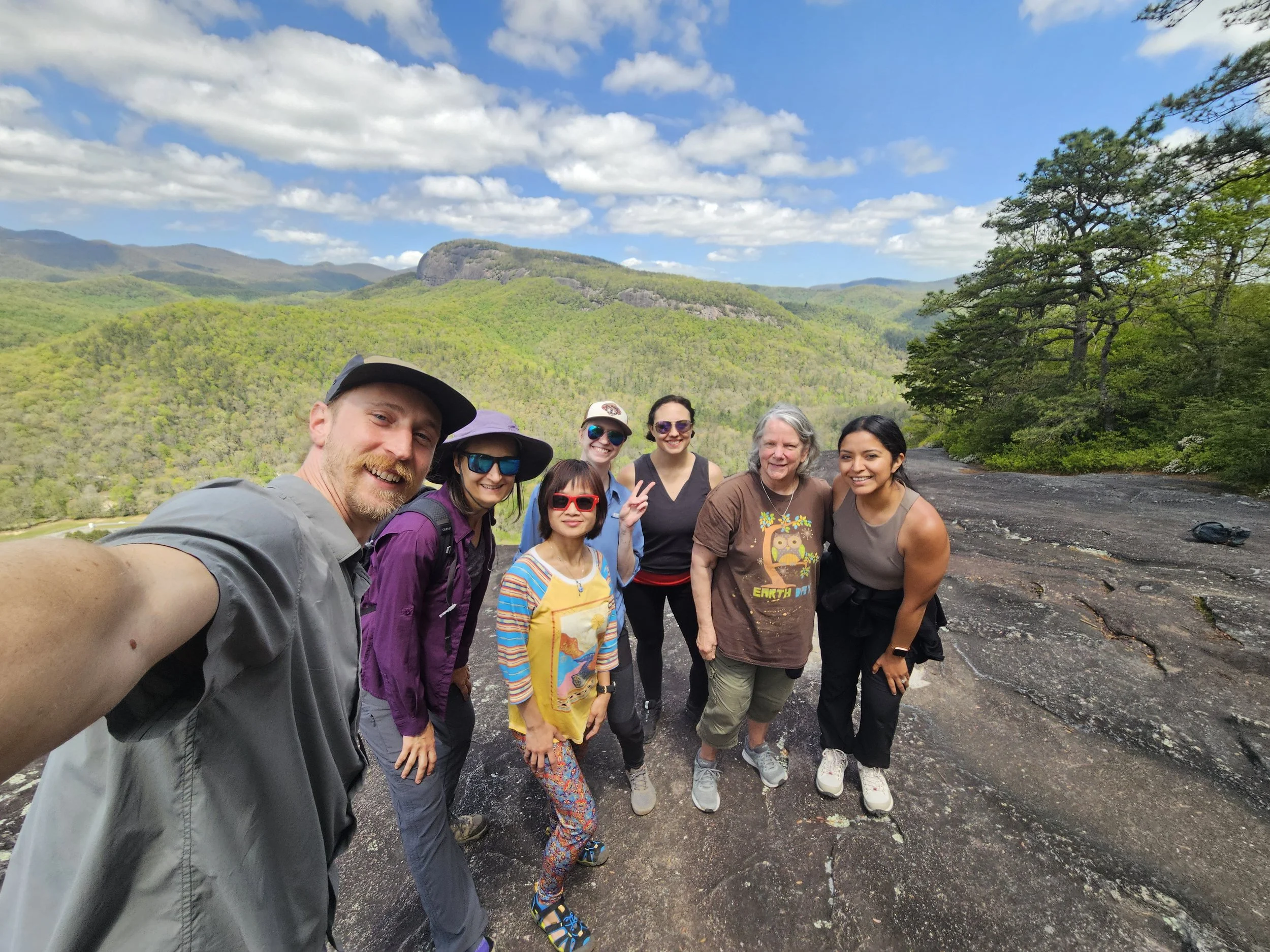
What's Included and What You Should Bring
This is where a lot of hikers get confused, so it helps to be specific. Guides carry the essential safety equipment for the trip: a GPS or communication device, a first aid and emergency kit, a headlamp, and a water filter. That's the gear that matters if something goes wrong on trail, and it's handled for you.
What you're expected to bring is more personal. Rain gear if the forecast calls for it, your own water bottles, and appropriate footwear for the terrain. Trekking poles can be provided if you ask ahead of time, but they aren't automatically included, so mention it when you book if you'll want them.
It's a fair trade. You're not getting a fully outfitted trip the way you would on a multi-day backpacking excursion, but you're also not showing up without support. The guide is carrying the equipment that actually keeps you safe, and you're responsible for your own comfort items.
Where These Hikes Happen
We operate in Pisgah and Nantahala National Forests, and our day hikes draw heavily on both. Waterfall Tours in particular span DuPont State Forest's signature cascades and the backcountry falls tucked deeper into Pisgah.
Pisgah alone is bigger than most visitors expect. It's split into distinct ranger districts, each with its own terrain and trail character, from the classic waterfall country near Brevard to the higher, more exposed balds further north. That range is part of why the four hike types exist. A Summit Experience and a Waterfall Tour are located in different parts of the forest entirely.
If you're weighing a single hike against something longer, trips and tours covers the full range of guided options across day hikes, climbing, and overnight trips in one place.
Common Misconceptions About Guided Day Hikes
"I need to be an experienced hiker to book a guide." This is probably the most common hesitation, and it has it backwards. A guide is there specifically so you don't need prior experience. The guide handles navigation, pacing, and trail selection so you can just show up and hike.
"Guided means everything is provided." Not quite. As covered above, guides carry the safety essentials, but you're still responsible for your own footwear, water bottles, and rain gear. It's worth confirming exactly what's included before your trip so you're not caught off guard.
"Rain means the trip is cancelled." Trips generally run rain or shine unless weather creates a genuine safety concern, like lightning on an exposed ridge or dangerously high water at a stream crossing. If conditions do cross that line, rescheduling or a refund is typically the path forward rather than an outright loss.
What to Expect Once You're on the Trail
Once you're actually out there, the pace is set to match the group; we aren’t on a tight schedule. Guides teach as you go, whether that's pointing out a plant on a Seasonal Plant Identification Hike or explaining why a particular overlook exists where it does on a Summit Experience.
Seasonality matters more in Western North Carolina than a lot of first-time visitors expect. Spring brings wildflowers and strong waterfall flow but also muddy trails and the occasional icy patch at higher elevations. Summer means long daylight and high-country relief from the heat, but also afternoon thunderstorms that tend to build fast. Fall brings the leaf color everyone comes for, along with heavier trail traffic and shorter daylight windows. For a full seasonal breakdown, the best time to hike in North Carolina guide goes deeper into what to expect month by month.
How to Choose the Right Day Hike
Start with what you actually want out of the day. If you want a manageable pace with a clear payoff, a Waterfall Tour or a half-day hike is usually the right call. If you're chasing a view and don't mind more elevation gain, a Summit Experience fits better. If you're interested in the ecosystem itself, not just the destination, a Seasonal Plant Identification Hike is worth a look. And if you want the more rugged, wilderness-adjacent feel without committing to an overnight trip, Shining Rock Wilderness Experiences are built for that.
If a single day ends up leaving you wanting more, that's usually a sign an overnight trip might be the next step. NC backpacking covers what that looks like if a day hike turns into wanting a full night in the backcountry.
Frequently Asked Questions
How long are guided day hikes in Western North Carolina?
Half-day hikes run three to five hours, and full-day hikes run seven to nine hours. The right length depends on how much trail you want to cover and how much of your day you want to commit.
Do I need my own hiking gear for a guided day hike?
Guides carry the essential safety equipment, including a GPS or communication device, first aid kit, headlamp, and water filter. You're responsible for bringing rain gear if needed, your own water bottles, and appropriate footwear. Trekking poles can be arranged ahead of time if you'd like them.
What happens if it rains on hike day?
Trips generally run rain or shine. If weather creates a genuine safety concern, rescheduling or a refund may be offered instead of continuing the trip as planned.
Are guided day hikes good for beginners?
Yes. In fact, that's the main reason to book one. A guide handles the navigation and pacing so beginners and families can enjoy the trail without needing prior hiking experience.
What areas do guided day hikes cover?
Day hikes take place across Pisgah National Forest and DuPont State Forest, with Waterfall Tours spanning both areas and Shining Rock Wilderness Experiences focused on the more rugged terrain within the Pisgah Ranger District.
How much do guided day hikes cost?
Half-day hikes (3 to 5 hours) start at $200 for one to four hikers, with a $25 charge for each additional hiker up to ten. Full-day hikes (7 to 9 hours) start at $320 for one to four hikers, with a $40 charge for each additional hiker up to ten.
Getting Started with a Day Hike
You don't need to be an expert to get outside in Western North Carolina. You need a guide who's been there, and that's exactly what a guided day hike gives you, whether you're chasing a waterfall, a summit view, or just a reason to finally get on the trail. Browse the full lineup of guided day hikes and pick the one that matches what you're actually looking for.
For general trail conditions and closures in the area, the U.S. Forest Service's Pisgah Ranger District page is a good reference, and Leave No Trace's seven principles are worth reviewing before any trip into the forest.